Franchise Deep Dive: Boston Celtics


It is no secret that the Boston Celtics are one of the NBA’s most prominent franchises. They have won the most championships in NBA history, and a winning culture is ingrained in every piece of those iconic parquet floorboards. But 18 championships certainly doesn’t happen on accident. Welcome to my newest series, where we take a deep dive into the history of NBA teams, starting today with one of the oldest and greatest of them all: the Boston Celtics.
Eras
We will divide the history of this storied franchise into a number of different eras, each encompassing a different period of Celtics basketball. The eras talked about today will be as follows:
- Early Years
- Dominance
- The In-Between
- Larry Legend
- Hangover Period
- The Big 3
- Current Day
Each of these was important in the history of Boston, and we’ll discuss the most important developments in each era.
Early Years

The Celtics were founded in 1946 by Walter Brown, as one of the original eight teams for the Basketball Association of America (BAA). When the BAA and NBL merged in 1949, the Celtics went along for the ride, joining the new league that the merger formed: The NBA. The team hadn’t enjoyed much success in their three years with the BAA, never once having a record over .500, but that would change quickly after their transition to the NBA.
In 1950, the Tri-City Blackhawks drafted Bob Cousy, but Cousy refused to sign with them due to his desire to stay in the Boston area, as he had gone to Holy Cross university for college. The Blackhawks traded his drafting rights to the Chicago Stags, but the franchise folded that offseason, and their players went into a dispersal draft, which ended up with the Celtics landing Cousy.
Cousy was dominant for his entire tenure with Boston, making 13 All Star teams, 12 All-NBA teams, and winning the 1957 NBA MVP. He played with some solid teammates as well, including eight time All Star Bill Sharman and seven time All Star Ed Macauley. But still, the team just couldn’t quite get over the hump. They were going to need someone else to help them reach their true potential and establish themselves as a championship team.
Dominance
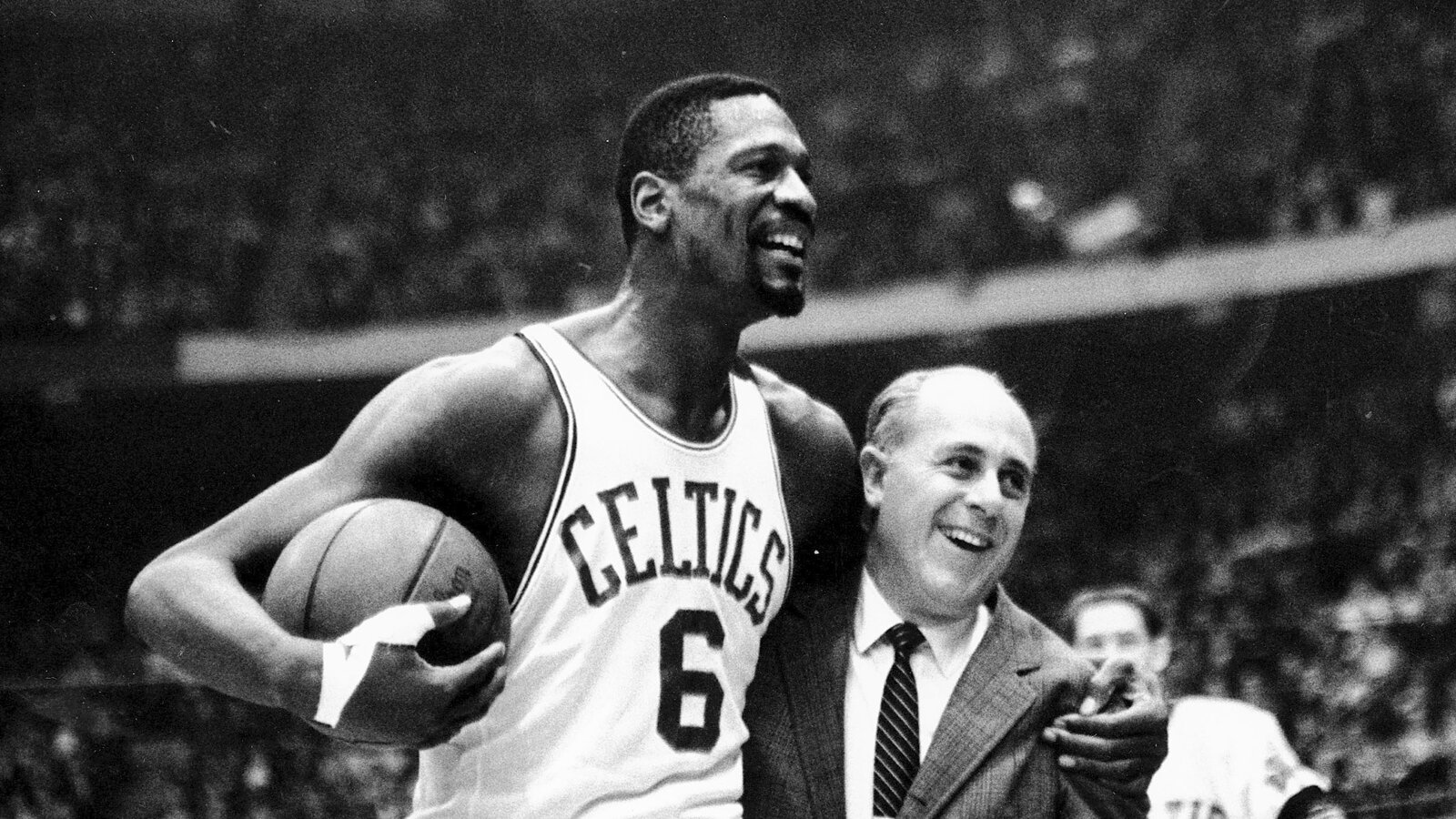
With the second overall pick in the 1956 NBA draft, the St. Louis Hawks selected Bill Russell, a 6’10” center from the University of San Francisco. The Hawks, however, traded away the pick for Ed Macauley and the rights to Cliff Hagan, both of whom would end up being inducted into the Hall of Fame, but they pale in comparison when side-by-side with Russell.
Bill made an immediate impact, leading the league in rebounds per game for his first three seasons, but he wasn’t even the highest regarded rookie on his own team, at least, not during their rookie seasons. Tom Heinsohn, who had been taken with the sixth overall pick, won Rookie of the Year that year, not Bill (although much of that can be attributed to Bill only playing 48 games). Led by the two rookies, MVP Cousy, and Sharman, the Celtics had their best year yet, beating the Hawks in the 1957 Finals to finally become NBA champions. And they never looked back.
They lost the 1958 Finals to those same Hawks, but then proceeded to follow that up with eight straight championships. Yes, eight. In a row. From 1959 to 1966, the Celtics ruled the NBA. The team didn’t remain the same the whole time, though. Sharman retired in 1961, with Cousy following in 1963, but the level of talent didn’t dip in Boston. Russell was obviously there the whole time, winning five MVPs and cementing himself as one of the greatest defenders and rebounders of all time. Along with him were Sam Jones, who the Celtics drafted in the 1957 draft, and who ended up being a five time All Star, John Havlicek who was drafted in 1963 and would lead the Celtics after Russell’s retirement, and Tom Heinsohn, who stuck around from 1957 to 1965.
It felt like the Celtics couldn’t lose, and this was practically true. In Bill’s 13 years with the franchise, the Cs won 11 rings, only missing out in 1958 and 1967. This era of Celtics basketball is the most successful one team has ever been, and it cemented the Celtics as one of the greatest franchises in the NBA, and Bill as one of the greatest players.
The In-Between
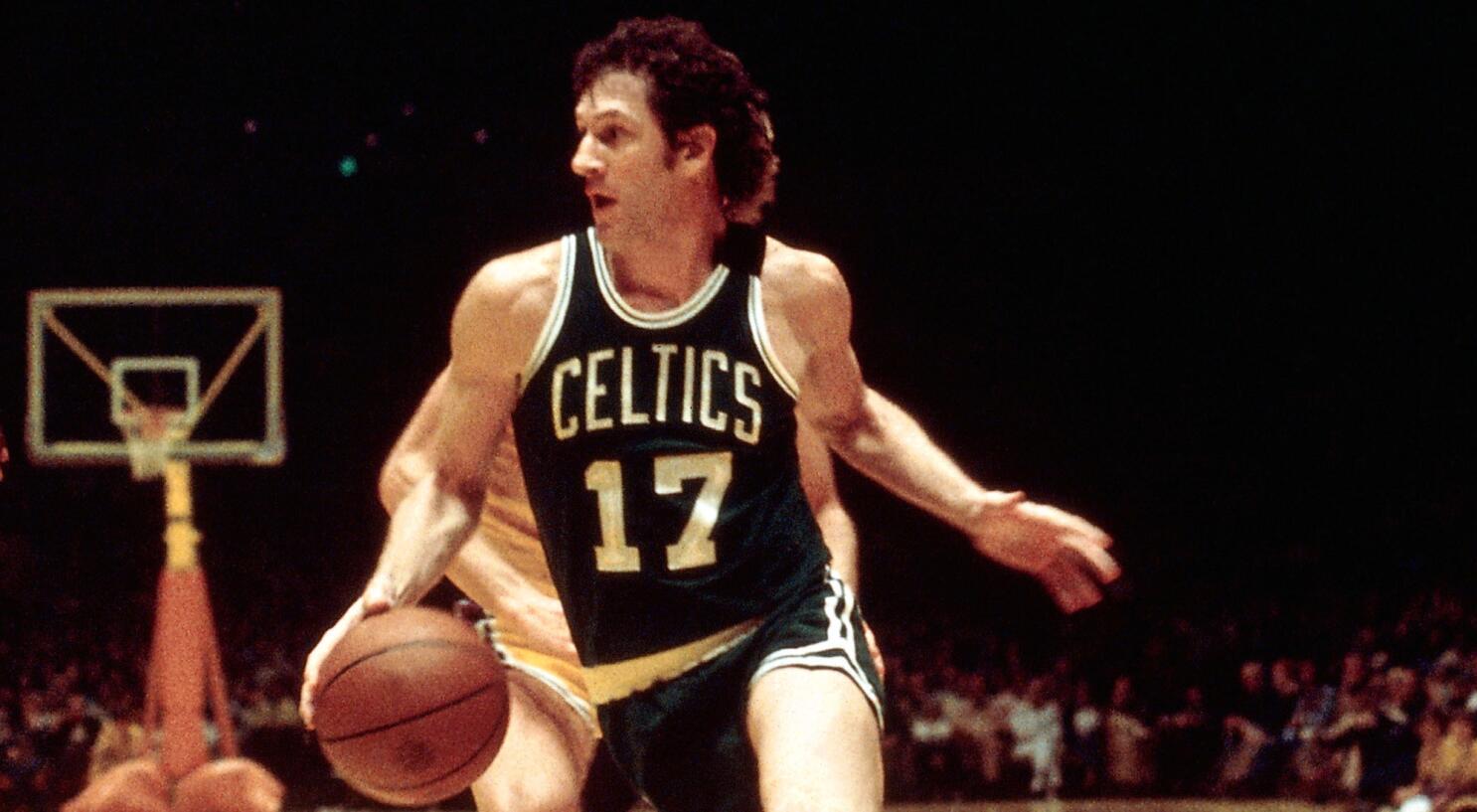
Unfortunately, all good things must come to an end, even the career of Bill Russell. And although the level of Celtics play would dip, it was still near the top of the league. They did dip below .500 for the first time in 20 years in 1970, but they would be back in no time. By 1972, they were back in the Eastern Conference Finals, led by John Havlicek, who had been a part of the later 60s NBA teams, and Dave Cowens, who had been drafted in 1971.
By 1973, Cowens was the MVP of the league, and the Celtics were back in the Eastern Conference Finals, but they lost to the Knicks. The next year, however, the story would be different. The Celtics beat the Knicks in the ECF that year, and went on to beat the Bucks in the Finals, with Havlicek winning Finals MVP, making him the first Finals MVP in Celtics history, as the award hadn’t existed until 1969.
In 1976, the Celtics were back in the Finals, still led by Cowens and Havlicek but now with Jo Jo White playing a bigger role. White had been drafted in 1969, and ended up being a seven time All Star in his career, and he won Finals MVP in ’76 after the Celtics bested the Suns. After 1976, the Celtics took a slight dip, being eliminated in the Eastern Conference Semis in ’77 and then missing the playoffs the two years after that. Havlicek retired after 1978, Cowens after 1980 (although he played one year for the Bucks in 1983), and White was traded away from the Celtics during 1979.
This era of Celtics basketball is certainly still successful, and for many other teams in NBA history it would be their most successful decade, but the Celtics aren’t most teams. This decade of Celtics hoops gets overshadowed by the dominance of the Celtics teams before them and the success that came after.
Larry Legend

By the time the 80s rolled around, it was clear the Celtics were going to need some new blood in order to maintain their ridiculous standard of success. Havlicek was gone, White was gone, and Cowens was getting older. They had brought in veteran point guard Tiny Archibald, but the success was going to come from the youth movement. They took Cedric Maxwell 12th overall in the 1977 NBA draft, and in the 1978 draft they took Larry Bird out of Indiana State University. Bird elected not to play in his rookie season, which the Celtics were aware of before drafting him, and he played one last year at Indiana State. It proved to be very successful, as they made it all the way to the National Championship, although they lost to Michigan State and a kid named Magic Johnson.
By the time Bird joined the Celtics, they were ready to contend again. In his rookie year they went to the Conference Finals, and by the next year they were NBA champs, beating the Houston Rockets in the Finals. That year, Cedric Maxwell won the Finals MVP over Bird, as Bird struggled to score the ball in that series, but the supporting cast stepped up big time.
And the supporting cast was absolutely incredible for those 80s Celtics teams. Obviously there was Bird and Maxwell, but the Cs had also picked up big man Robert Parish from the Warriors, who would be a nine time All Star for the Cs, and they drafted Kevin McHale third overall in the 1980 NBA draft, and McHale ended up being a seven time All Star and a two time sixth man of the year.
This team was stacked, and their success reflected that. They went to the Finals every year from 1984 to 1987, three of those times being against the Los Angeles Lakers. This rivalry would define the 80s, and the two teams constantly butted heads. The Celtics won one of the matchups with the Lakers, in 1984, with Bird winning Finals MVP. The Celtics won again in 1986, but this time against the Houston Rockets, Bird winning Finals MVP again.
The Celtics lost in the ECF in 1988, and after that didn’t get past the second round for the remainder of Bird’s career. Bird played just six games in 1989, and injuries would continue plaguing him for the rest of his playing days, and he retired after the 1992 season as a three time champ, three time MVP, and a 12 time All Star. McHale wasn’t far behind, retiring after the 1993 season. Parish continued hooping for a little while longer, not leaving the Celtics until after 1994, and still hopping around the league after that.
Hangover Period

How does a team follow up a legacy so great as Larry Legend and the Celtics of the 80s? The simple answer is, they don’t. In 1994, the Celtics missed the playoffs for the first time since 1979, and this trend would continue for most of the 90s. They did make the playoffs in 1995, but lost in the first round to Shaq and the Magic. From 1994 to 2001 they didn’t finish with a record over .500 once, and the Celtics appeared to be far from their glory days.
It is also worth mentioning the unfortunate case of Reggie Lewis. He had been drafted by the Celtics in 1987, and had been extremely solid for them once given minutes and opportunity, even making the All Star team in 1992, giving Celtics fans hope for the future, but that would go downhill quickly. Lewis fainted during a playoff game, but doctors assured him the condition was nothing too serious, but in the offseason Lewis suffered cardiac arrest, tragically passing away at the age of 27. It was a terrible accident that a great basketball player suffered, and is one of the saddest moments in NBA history. Rest in peace Reggie Lewis.
Despite the rough spot that the franchise was in, however, there were a couple bright spots. Players like Dino Radja and Dee Brown played solid roles during these years with the franchise, and in 1996 they drafted Antoine Walker, who would be a three time All Star in his career. In 1997, they followed up by drafting Chauncey Billups, although they traded him for Kenny Anderson at the request of head coach Rick Pitino.
The real draft day hit, however, came in 1998, when the Celtics selected Paul Pierce 10th overall from the University of Kansas. Pierce would be leading the team in win shares in his first season, and by season four he was an All Star. And by Pierce’s third season, in 2002, the Celtics were back in the playoffs. They even made it all the way to the Eastern Conference Finals before losing to the Nets. But they weren’t out of the rough years yet, as they wouldn’t return to the Conference Finals again for a few years, even missing the playoffs entirely in the 2006 and 2007 seasons. Pierce was great, but he was going to need some help if the Celtics wanted to return to glory.
The Big 3
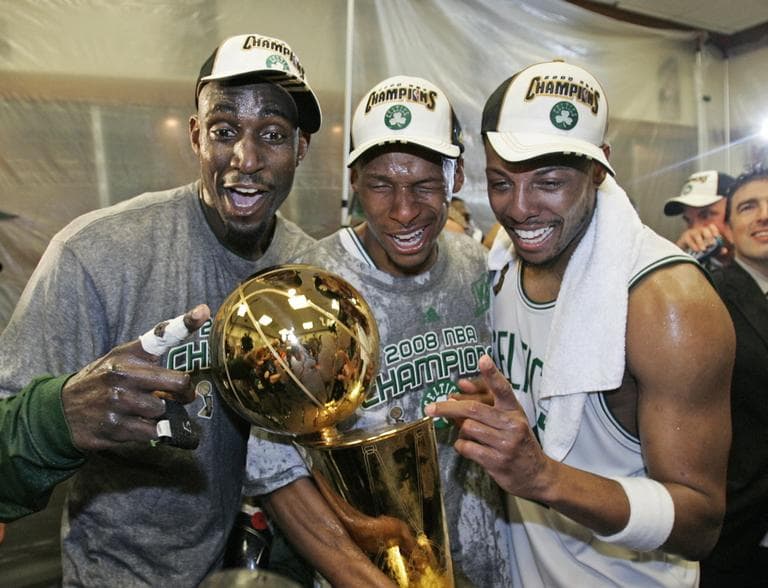
Fueled by the desire to get back to the championship winning culture of the olden days, Danny Ainge and the Celtics front office decided to make one of the most prominent “big threes” of the 21st century. They already had the first piece, Paul Pierce, who was already a five time All Star before 2007, and had been the face of the Celtics for years.
But now they needed the others. The second piece was Ray Allen, who the Celtics received from the SuperSonics in exchange for Delonte West, Wally Szczerbiak, and a young Jeff Green. Allen was 32 years old at the time of joining the Celtics, and was a seven time All Star by this point, playing great basketball in both Seattle and Washington. He was one of the best three point shooters in the league and of all time, and although his athleticism has started to taper off, Allen was still a threat, and a huge addition for the Celtics.
The third and final piece of the Big Three was Kevin Garnett. Garnett was widely regarded as one of the top players in the NBA, winning the MVP award in 2004 and already becoming a 10 time All Star and eight time All NBA player, playing incredible basketball on both ends of the floor. The Celtics shipped away Al Jefferson, Sebastian Telfair, Ryan Gomes, Gerald Green, Theo Ratliff, and a couple of first round picks.
The success of the trio was obvious right away. The Celtics had gone just 24-58 the year before, missing the playoffs entirely and finishing last in the Atlantic Division, but in 2008, now armed with the new trio, they went 66-16, first in the Atlantic. Garnett won Defensive Player of the Year and finished third in MVP voting. Allen and Pierce did their bit as well, each making the All Star team, and second year Rajon Rondo played a big role as well. The Celtics that year made it all the way to the Finals, beating the Kobe led Lakers in six games, and bringing championship culture back to Beantown.
The rest of the big three’s time together wouldn’t yield any more championships, despite them returning to the Finals in 2010. Allen left for Miami after 2012, where he won another championship, and Pierce and KG would be shipped out together. The two of them, along with Jason Terry, were sent to Brooklyn in 2013 in exchange for Gerald Wallace, Kris Humphries, Marshon Brooks, Keith Bogans, and three first round picks. They were old, and not nearly as productive, so the Celtics dumped them off in order to bring in the youth movement, one that later proved very successful.
Current Day
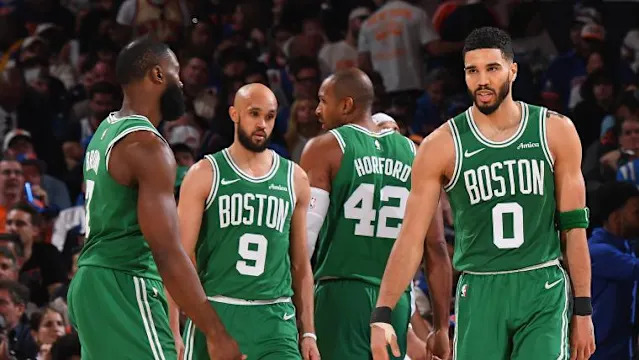
The draft picks that the Celtics received from the Nets proved to be very, very valuable. They turned into Jaylen Brown in 2016 and Jayson Tatum in 2017, both of whom became All Stars. The Celtics tried to build a variety of teams around the two, which included bringing in Kyrie Irving in 2018, although Kyrie didn’t re-sign, causing a dramatic break up between the two parties.
The real successful team up came in the 2023 offseason. The Celtics had already traded for Derrick White during the 2022 season, a year where they had gone all the way to the Finals but lost to Stephen Curry and the Warriors, and they still had Brown and Tatum. They went to the ECF in 2023, but lost to the Heat in 7. But when the offseason rolled around, they reloaded, bringing in Kristaps Porzingis and Jrue Holiday. That season, they dominated the league, ending as first in the East with the best offense in the league and third best defense. When the playoffs rolled around, the story was the same, as not a single series went past five games, and the Celtics were champions once again, with Jaylen Brown winning Finals MVP.
Unfortunately, the new CBA rules were instated shortly after the Celtics’ ring, and it dismantled their chances for continued to success. In the 2025 offseason, they had to get rid of both Holiday’s and Porzingis’ contracts, offloading them for significantly less talent. But although the Celtics may appear as less of a threat on paper after these moves, they still have some great talent, and if we’ve learned anything from the history of the Celtics it’s this: always bet on green.
All-Time Starting Five
So with a franchise with as much talent and winning in their history as the Boston Celtics, how does one shout out the best of the best? By combining the eras and making an all time starting five, along with a sixth man and a head coach. This is not strictly based on team fit, but mostly on talent. Furthermore, it’s worth mentioning the “Celtics Shaq” rule. Players are based off of their performance with the Celtics, not their all time peak. So players like Shaq, Rasheed Wallace, Chauncey Billups, and Blake Griffin, are not really contenders for this starting five, as their level in Boston was nowhere near their peak.
Point Guard – Bob Cousy
Newer fans may have adapted Cousy to fit the plumber agenda, but true ball knowers know the talent Cooz possessed. He was easily one of the best playmakers and passers of his era, and as an eight time assist champ, we can be sure he’ll get the ball to the other members of our starting five. He could score a little bit as well, averaging over 20 in multiple seasons, including his MVP year.
Shooting Guard – John Havlicek
It is true that Havlicek was a small forward for the majority of his career, but he did have a stretch of his primary position being at the two, so I’m counting it. Hondo is one of the better two way players in history, and although it can be difficult to gage his defensive impact for much of his career due to the lack of stats being tracked, the eight all defensive teams speak for themself, and his footage shows him as a solid wing defender. He was no slacker on the offensive end either, and he surely deserves a spot on this squad.
Small Forward – Larry Bird
This addition should surprise nobody. One of the most versatile players in NBA history, Larry had a jump shot that was before his time, great playmaking abilities, and was very solid at defense and rebounding. He could fill any role this squad would give him, and is one of the best NBA players of the 80s and history altogether.
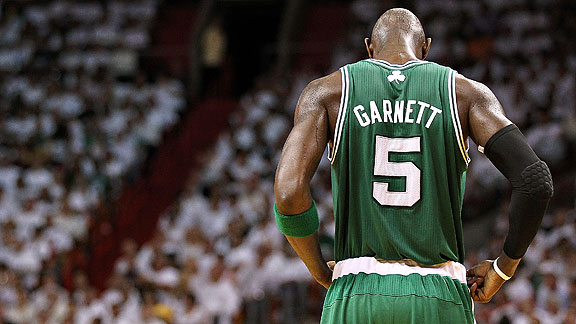
Power Forward – Kevin Garnett
It was between the two Kevins, Garnett and McHale, and although either could fit in this role extremely well, I just think KG peaked slightly higher in a Celtics uniform. He’s one of the greatest defensive players of all time with some of the best tenacity ever seen on an NBA court, plus he could rebound with the best of them. Teaming him up with Hondo, Bird, and Russell makes this lineup one of the best defenses possible.
Center – Bill Russell
Another one that should be no surprise. Bill is in the conversation for both the best defender and rebounder of all time, and he ties this team together extremely well. His offensive game is slightly less developed than the others, but with the stars around him, he won’t need to score.
Sixth Man – Paul Pierce
If you need some buckets off the bench, go to Pierce. Not the most athletic player, but Pierce could certainly fill it up, and this squad having such a talented player on its bench speaks to just how many greats the Celtics have had. Other teams defenses are going to go through hell going from Bird or KG to Pierce.
Some honorable mentions for this lineup go to: Kevin McHale, Sam Jones, Jayson Tatum, Dave Cowens, and Dennis Johnson
Overall Franchise Grade: A+
This shouldn’t be a surprise. The Celtics have the most rings of any NBA team for a reason, and when you look back at their history, the sustained success is mind blowing. The Celtics have a strong case to be the greatest and most storied franchise of all time, although their rivals in LA may argue that a bit. But truly, love them or hate them, you have to respect the Celtics.
 Title Runners