
How a Hall of Fame Park Became a National Landmark

· · ─ ·✶· ─ · ·
↴↴↴
To many, basketball isn’t just a game, it’s what they live and breathe. We turn to it when we’re scared, when we want to have fun and need an escape. The court is smaller than most playing fields for other sports such as baseball and soccer; and, unlike football and hockey there are no requirements for helmets and pads. Couple those facts with the accessibility of basketball and you’re looking at the most intimate and easy-to-play sporting experience in the world.
You don’t need a minimum number of players, a beautiful, upkept field or a boatload of heavy gear to have fun with basketball. All you need is a ball and a local hoop and anybody can make that work. You can play 1 on 1, 2 on 2, 5 on 5, or just shootaround by yourself. These are the types of recreational games that make Rucker Park the legendary landmark that it deserves to be.
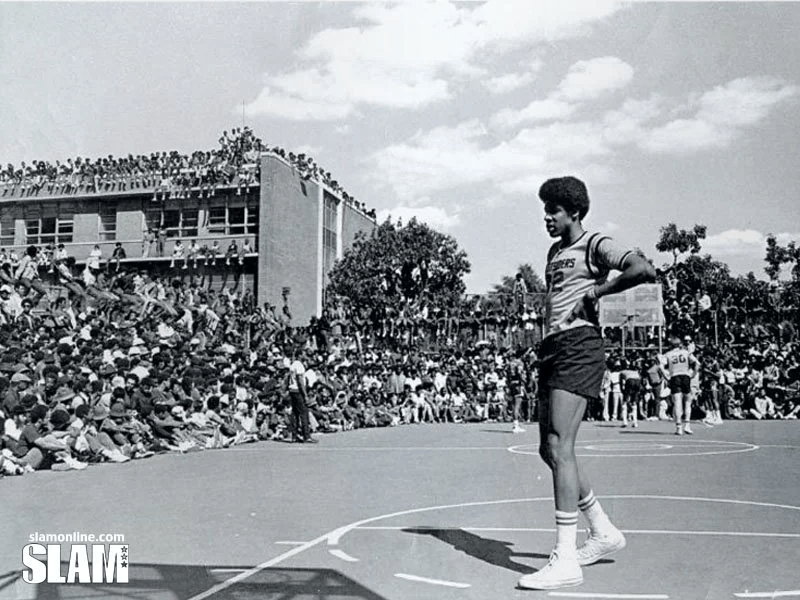
For those who don’t know, Rucker Park is an iconic municipal ground in Harlem, New York, right at the heart of Rep. Adriano Espaillat’s congressional district. In 2025, the park was recently designated a National Commemorative Site to recognize the park’s historical significance in the development of basketball. Everyone remembers the stories of legends like Wilt Chamberlain and Kobe Bryant who graced the historical concrete and dominated, I’ve attached an iconic performance below for reference.
Obviously the showstopping antics of Kobe Bryant and many other professionals are a sight to behold, but the reasons for Rucker Park being considered the Mecca of Basketball extend beyond just some cool names and highlights; and to find out why that is, we must give the landmark a much-deserved rewind.
⤸
Each One, Teach One
( っ’-‘)╮ =͟͟͞͞🏀
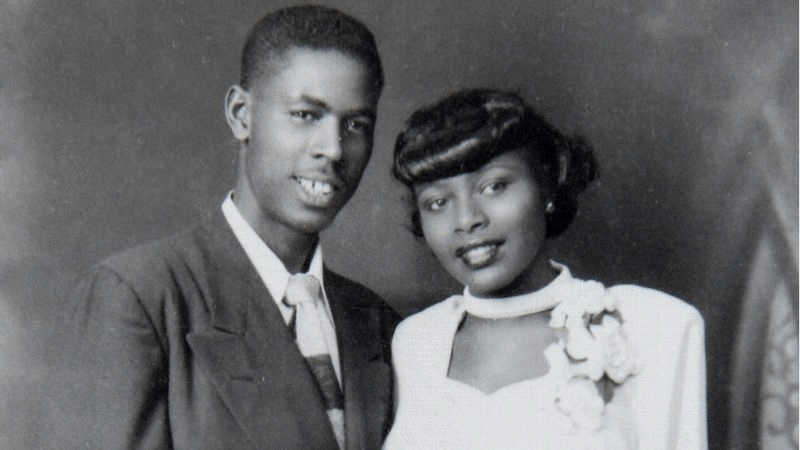
Rucker Park, originally known as the P.S. 156 playground, was established in the Harlem neighborhood of New York City in 1956. Since 1974, it was officially named “Holcombe Rucker Park” in honor of an excellent man who bore the same name. Raised by his grandmother on 141st street in Harlem, Holcombe Rucker became a local teacher and playground director who started a basketball tournament in the area that was aimed at keeping kids off the streets and inspiring them through sports and education. Mr. Rucker lived a meaningful life, albeit short as he died prematurely, at age 38, due to complications from cancer, leaving his wife Mary and his many devoted admirers to carry his legacy. However, that didn’t stop his life’s work from becoming a major success. He lived by a famous motto, “Each One, Teach One”. An African proverb that emphasizes the importance of one’s community and their responsibility to teach others what they’ve learned on their life’s journey. The main goals of the saying are to promote community engagement and responsibility while also empowering individuals to take ownership of their teachings.
It’s safe to say that Holcombe Rucker was no hypocrite, he was a man of his word and the messages that he preached shined through in his day-to-day work. He was an intelligent man, and he followed his teachings. Rucker Park was an exemplary example of the “Each One, Teach One” principle because of how its structured nature made it easy for kids and teens of all ages to pass on their knowledge from the game’s best players. Going back to the original sentence, at Rucker, basketball is more than just a game, it’s a fun tool that we use to instill discipline, perseverance, and respect—key life values taught peer-to-peer. From Dr. J and “Tiny” Archibald to Iverson and KD, these legends learned a lot from their mentors and passed it on to young boys in Rucker. Stars like Kareem Abdul-Jabbar are even from the NY-13 district and we are honored that his game gradually matured on the concrete floor of Rucker Park. Local teams like the New York Knicks and Harlem Globetrotters and many former professionals (NBA or otherwise) who made their mark at Rucker Park players return to give back to the community—through coaching, donations, or simply being present as role models. This dedication is key to helping the city prosper.
It’s easy to be fooled by the heavy basketball culture that Rucker Park is a one trick pony, but that is far from the case. A little-known tidbit is that Rucker requires players to attend school, showing how teaching went beyond the court and aimed at breaking cycles of poverty and systemic neglect. An essential fact that was prominent in the enshrinement of Holcombe Rucker, and subsequently the park he helped build into the Naismith Basketball Hall of Fame. This style of commitment to making youth lives better has had a major impact on our community because it ensures better odds that kids only go outside to go to school or play. No loitering on the streets in front of bodegas, no getting into gangs or drugs, just a kid living their childhood the way it’s supposed to be lived. My father always told me that as a kid, I only had 3 responsibilities, do well in school, be a good son and be a good brother. Rucker Park’s existence inherently helped guide children into the right path because in my eyes, by going to school and coming to the park to show exemplary character, you are doing a great job as a child, sibling, student etc.
➼
The Impact That’s Felt Today
…
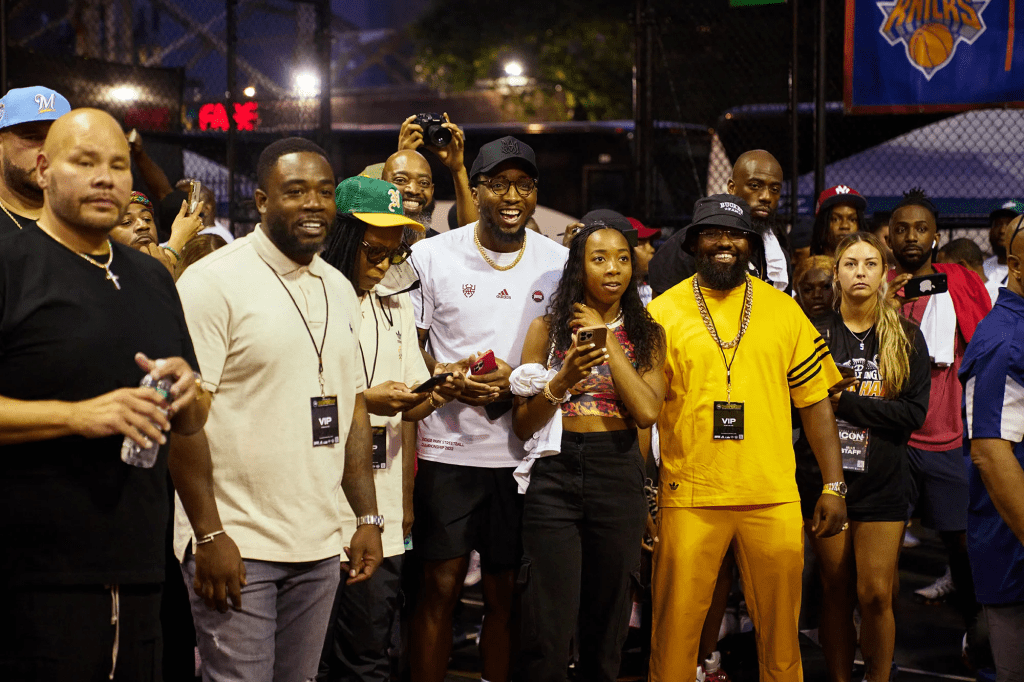
Most recently, you will notice that Rucker Park was refurbished in 2021 as the NBA Players Association, then-led by NBA legend Chris Paul funded a $520,000 renovation by raising money with the help of Puma, and others. The tantalizing new version of the park includes a new court surface, enhanced lighting, and improved bleachers, preserving its legacy while modernizing its operations. All of this fanfare came just in time for Rucker Park to be officially known as a National Landmark in early 2025. The decision to give Rucker Park yet another prestigious honor was met with tons of praise and an endorsement by Rep. Adriano Espaillat (NY-13).
All in all, just as basketball is more than a game, Rucker Park stands as more than a court—it’s a symbol of opportunity, resilience, and excellence. It isn’t just a place to play—it’s a place to grow; and that growth happens one person at a time, passing knowledge and support from one to the next. That’s “each one, teach one” in action. That was Holcombe Rucker’s vision for Harlem and if he were here today, I don’t think he’d be able to fathom how successful his ideas became. Rucker is worthy of his name being on the hall of fame park, as you simply can’t tell the story of basketball, nor the story of New York City, without mentioning a dude from 141st street, and a dream to spread positivity with a ball and a net.
Fin.
 Title Runners