

The Art of the Glue Guy
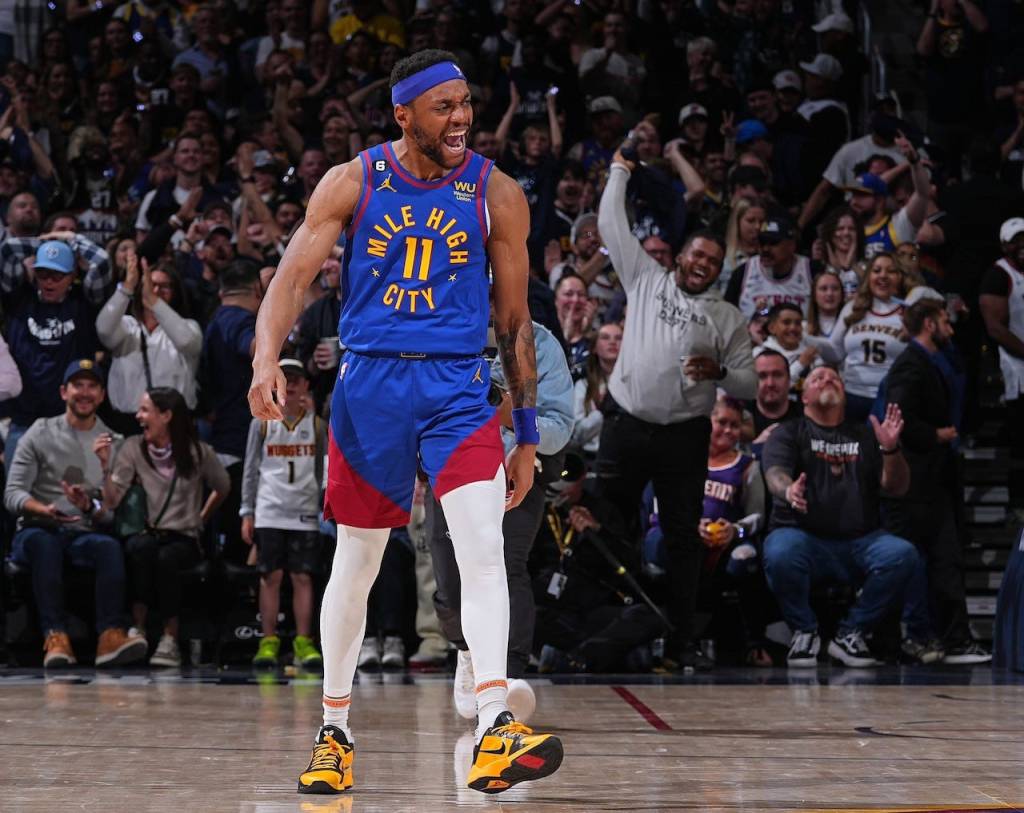
Everyone knows the stars. Ask anyone on the street who LeBron James is, and you’ll get an answer. Luka Doncic, Nikola Jokic, Jayson Tatum, Giannis Antetokounmpo, these guys are household names, and for good reason. Teams can’t win a championship without a star. It’s been proven over and over that you need “that guy” to win anything of importance. But basketball isn’t a one man sport. Basketball is a team game, one of cohesion, teamwork, and companionship. So who makes up the rest of the team? Who provides the spirit and hustle that is necessary for the success of any team? Who really makes a team a contender, if not the big name stars?
The glue guy. The role player. The players who fly under the radar but really deserve their flowers. No basketball team, in the history of the sport, has been successful without them. The narrative that one star can take a bunch of nobodies to the Finals is not just overused: it’s ridiculous. No one man, no matter how impressive, can take a team to victory by themself. The beauty of glue guys is that even if they don’t score 15, or even 10, they impact the game in an invaluable way. Here, I want to highlight some of the most popular archetypes seen in role players, and shout out some of the most impactful of all time, as well as in the league today.
The Criteria
What constitutes a glue guy? Obviously there have been a ton throughout the history of the NBA, but I wanted to highlight a few, as well as a few different archetypes of players. Here’s what I settled on:
- No more than 1 All Star selection
- Were never a traditional “star”
- Contributed to team success
With those criteria in mind, I created 5 different player archetypes, and came up with 3 different examples for each:
The Defensive Hound – Not a hugely impactful player on the offensive end, but someone who consistently fought on defense and put in effort to lock up the best players on the other team.
The 3&D Wing – Similar to the defensive hound, but with more provided value on the offensive side, specifically through their 3pt shooting.
The Enforcer – We know what these guys do. They’re tough, they fight in the trenches, and they make the team all the more intimidating.
The General – A leader of the team, leading through playmaking and intelligent passing.
The Shooter – An extremely prominent role today, these guys know how to do one thing, and that’s shoot the cover off the basketball.
Obviously these archetypes don’t represent every player that provides value in some way, with guys like Bobby Jackson, Toni Kukoc, Mike Miller, and Corliss Williamson not being mentioned in this article. Their value is just as impactful, but a line had to be drawn somewhere. Also note, these are not necessarily the best players that fit each of these archetypes, but rather ones I wanted to give shout outs to (sorry Shane Battier).
Furthermore, most of the players mentioned are from 1980 and beyond. Obviously there were role players before that, but I stick to my areas of expertise, plus video footage is easier to find for players from more recent times.
The Defensive Hounds

Tony Allen – (2005-2018)
Resume: 6x All Defensive, 1x NBA champ
There’s not much higher praise than Kobe Bryant AND Kevin Durant calling you the best defender they ever faced.” That is a level of praise only reached by one, and that one is Tony Allen. Allen may have not been a scoring threat (only averaged over 10 PPG once, and only shot more than 1 three per game once, both in a short season for Boston), but the impact he brought was on a whole other level.
Allen had a signature playing style: intense. He played with fire and energy every game, hustling more than anyone else on the court and almost always defending the best player on the other team. He may have been just 6’4”, but he played significantly larger, refusing to be beaten by anyone, and relishing the opportunity to defend the best players. His jersey retirement was well deserved.
Tayshaun Prince – (2003-2016)
Resume: 4x All Defensive, 1x NBA champion
Compared to the other players in this category, Prince was a significantly better scorer. He averaged around 14 points per game for much of his prime, his length and solid handle making him a solid player on that end, but his value was much more appreciated on defense. Once again, that length made him a serious threat on the defensive end, and although his defensive stats don’t look as impressive as others, his value was clear to see and was a big part of the Pistons run in 2004.
It truly wouldn’t be right to have this article without giving a shout out to that 2004 Pistons team. They had an incredible squad, but they did lack the traditional superstar. The team was built on grit and hard work, and the glue guys (such as Tayshaun Prince), held the team together and helped them overcome the Shaq and Kobe led Lakers.
Marcus Camby – (1997-2013)
Resume: 1x DPOY, 4x All Defensive
Marcus Camby is, plain and simple, one of the best shot blockers of all time. He’s not a wing defender like the other two in this category, but the defensive value is possibly the most impactful. Along with averaging a double-double multiple times for both New York and Denver, Camby led the league in blocks per game four times, three of which came in Denver and one in just his second year in the league whilst playing for Toronto.
The value of a rim protector for any contending team cannot be overstated, especially in the 2000s, and Camby provided that. Although he was unfortunately never able to win a championship, he did go to the finals once in 1999 with the Knicks.
The 3&D Wings

Bruce Bowen – (1997-2009)
Resume: 8x All Defensive, 3x NBA champion
Bowen’s defensive impact was clear from the start of his career. His first career year where he really got significant minutes, Bowen averaged 1.4 steals per game, despite starting just 9 games. However, the three point jumpshot hadn’t yet developed. He shot 34% from three on just 1 attempt per game, which would be the story of his early career.
Bowen’s role would truly unlock with the Spurs. Not only would his minutes and starts increase, but his three point attempts and efficiency would climb drastically, leading the league in percentage in 2003 and continuously shooting 2.5+ threes per game on nearly 40% shooting. Plus, the defense wouldn’t go anywhere, as Bowen would make 8 All Defensive teams, all of them with San Antonio, as well as being a pivotal member of three championship teams.
Michael Cooper – (1979-1990)
Resume: 1x DPOY, 8x All Defensive, 5x NBA champion, Hall of Fame
The original 3&D player, Cooper was a huge part of the Laker success in the 80s, and his jersey retirement was well deserved. Coming off the bench for most of his career, Cooper was one of the best wing defenders in the NBA, consistently facing tough matchups and playing extremely well, and providing a ton of value in an era with incredible scorers like Jordan, Bird, Dantley, English, etc.
But what made Cooper really unique was that he was not just a solid but a willing three point shooter in an era when the three point line was relatively new and unused. At his peak, Cooper shot nearly 3 three point attempts per game, and knocked them down at a clip close to 40 percent, and although those numbers wouldn’t jump off the page today, in the 80s this provided a ton of value and versatility to the Lakers.
Danny Green – (2010-2024)
Resume: 1x All Defensive, 3x NBA champion
Danny Green may be remembered by some as the guy who missed a wide open three in the 2020 NBA Finals. But by others, Danny Green will be remembered as one of the most valuable three point shooters in the league during his time, as well as a very, very solid defender.
Green wasn’t just valuable for one team either; he won three rings with three separate franchises, and played a pivotal role in each. Putting up over 3 threes per game for eleven straight seasons, teams knew what they were getting in Danny Green, and in an era where three point shooting is more valuable than ever, a sharpshooter with defensive tendencies is exactly what teams are looking for.
The Enforcers

Charles Oakley – (1986-2004)
Resume: 1x All Star, 2x All Defensive
Oakley was, in a word, mean. The 12th most technical fouls in NBA history, with 168, Oakley imposed a sense of fear in any team he went against. His altercation with Tyrone Hill in 2001 got him fined $10,000 and suspended for a game, and that was just one incident. You didn’t mess with Charles Oakley.
But Oakley wasn’t a thug: he was a baller. He consistently put up great rebounding numbers, and he was an All Star for a reason, also putting in solid scoring numbers, to go along with his great defense. Oakley never won a championship, but as the big next to Patrick Ewing they would make the Finals in 1994.
Anthony Mason – (1990-2003)
Resume: 1x All Star, 1x All NBA, 1x 6MOY, 1x All Defensive
Anthony Mason is one of the most interesting archetypes in the history of the sport. A large, 6’8”, 250 lb build, he was imposing physically and played the enforcer role extremely well during his time in New York, a part of that Finals team in 1994 along with Oakley. Furthermore, in true enforcer fashion, Mason is tied for the sixth most technical finals in history.
Interestingly though, the enforcer aspect of Mason was far from his only strength. He was an extremely solid scorer on the interior, combined with a sick handle for someone of his size, making him an offensive threat. Furthermore, later in his career he would improve his passing abilities, becoming a well rounded offensive player. He wouldn’t make the All Star game until after his peak enforcer days, in a one and done season with Miami in 2001.
Rick Mahorn – (1981-1999)
Resume: 1x All Defensive, 1x NBA champion
Mahorn would stick around the league for a while, but he peaked with the Washington Bullets and the Detroit Pistons, putting up his best defensive stats in Washington but making an All Defensive team in Detroit and winning a championship there in 1989. A pivotal part of that championship squad, Mahorn may not have put up incredible numbers but the impact was there, and he was a big part of the “Bad Boy” persona of the late 80s Pistons teams.
The Generals

Andre Miller – (2000-2016)
Miller doesn’t have the awards to show for it, but he was one of the best floor generals in the league for years, leading the league in assists once and consistently putting up great assist numbers throughout his career, as well as putting up really solid scoring numbers for a variety of teams.
When it comes to great players to never make an All Star team, Miller has a great case. An incredible playmaker and very solid scorer who also forced turnovers, averaging around a steal per game for years. He was limited by the lack of team success, never making it out of the first round, making him one of the few players on this list whose team struggled despite his contributions.
Derek Fisher – (1997-2014)
Resume: 5x NBA champion
Fisher exemplified winning for years, as seen by his five championships. He was never the best player on any of the champion teams (after all, that’s difficult to do when you play with Kobe Bryant), but he also was a great playmaker, solid scorer, and confident shooter during those years. He embraced both roles off the bench and as a starter, playing a significant role and earning his way to each of his rings.
Furthermore, the value of a veteran presence cannot be overstated. After being on so many successful teams, Fisher was a great source of experience and knowledge for younger players in his later years, specifically in OKC.
Nate McMillan – (1987-1998)
Resume: 2x All Defensive
McMillan was a perfect example of a two way guard, creating turnovers on the defensive end, leading the league in steals in 1994, and making two all defensive teams in his career, plus being a great playmaker. On the offensive end, McMillan was a great passer, averaging over five assists per game for eight years of his career.
McMillan also performed in the playoffs, continuing his passing and defense throughout his career. He was a part of the Supersonics team that would go to the Finals in 1996, although he played a somewhat limited role.
The Shooters

Robert Horry – (1993-2008)
Resume: 7x NBA champion
The following players have less rings than Robert Horry: Michael Jordan, Kobe Bryant, LeBron James, Shaquille O’Neal, Steph Curry, the list goes on. Only members of the 60s Celtics have more, back when they had one of the greatest and most successful teams of all time. Some say Horry was just in the right place at the right time: I say Horry just knew how to play a role.
For years, Horry did everything necessary for championship teams. He was a good shooter, especially in the clutch, he had physical tools that allowed him to be a solid rebounder and defender, and he had the experience to make smart plays and championship winning plays. And sure, he was on some all time teams.
Steve Kerr – (1989-2003)
Resume: 5x NBA champion
Before he was the coach of the greatest shooter of all time, Kerr was one of the best shooters himself. On the 90s Bulls teams with Jordan and later the Duncan led Spurs teams, Kerr found himself in some great situations, and he made the best of them. The best career 3pt percentage of all time, Kerr knocked down shots efficiently and often.
Kerr was one of the pioneers of the three pointer in the 90s, a time when three point shooting was far less of an emphasis, but he shot a lot and he shot confidently.
JJ Redick – (2007-2021)
Another current coach, Redick was also an extremely efficient three point shooter in his day, knocking down threes for a number of teams, including the Lob City Clippers, the Dwight Howard era Magic, and the late 2010s Sixers. He scored a good amount, up to over 15 per game, much of it coming from the three point line. He shot over 40 percent for much of his career, ending with near 45 percent from three on his career.
One of the greatest shooters of all time, JJ may never have won a championship, but his role in the league is one that is not going out of style anytime soon, and tons of guys across the league emulate a similar style due to the three point emphasis today.
Glue Guys Today


So with all these archetypes and all these examples, who fits this category today? Who are the glue guys that we can one day look back on and recognize their impact was more than the numbers and awards? They’re everywhere, if you know where to look.
The Defensive Hounds – Lu Dort, Herb Jones, Jaden Mcdaniels, Peyton Watson, Toumani Camara, Jarred Vanderbilt, Nic Claxton, Josh Hart, Keon Ellis, Kris Dunn, Davion Mitchell, Marcus Smart, Alex Caruso
The 3&D Wings – OG Anunoby, Mikal Bridges, Kentavious Caldwell-Pope, Nicolas Batum, Dorian Finney-Smith, Royce O’Neale, Haywood Highsmith, Nickeil Alexander-Walker, Matisse Thybulle, Bruce Brown
The Enforcers – Dillon Brooks, Isaiah Stewart, James Johnson, Steven Adams, Jalen Duren
The Generals – TJ McConnell, Monte Morris, Tyus Jones, Ty Jerome, Immanuel Quickley, Josh Giddey, Dennis Schroder
The Shooters – Luke Kennard, Cam Johnson, Donte Divenchenzo, Buddy Hield, AJ Green, Grayson Allen, Malik Beasley, Sam Hauser, Gary Trent Jr, Cason Wallace, Micahel Porter Jr
Whether it’s a veteran stepping into a new role, a young player filling into a role, or someone who just finds their spot, the value of the glue guys cannot be overstated. Too often, fans focus only on the players who get the most highlights or score the most points. The little things are incredibly important as well, and no team would succeed without the presence of great role players. I implore you, next time you watch an NBA game, don’t focus on the plays made by the big players. Focus on the little things, the hustle, the guys who get on the ground for every loose ball, who make the extra pass, who knock down their open shots. Those guys are important, and without them, none of the teams today would function.
 Title Runners